Revisiting Project GOOD: The Goal-Oriented and Organized Reading Program
Results of recent assessments both conducted locally and globally shows that proficiency levels in the Philippines is at low level.
For example, EDCOM 2 has disclosed on January 2026 that national assessment data show that only about four out of every 1,000 senior high school students demonstrate the competencies expected after more than a decade of schooling.
Meanwhile, 2024 ELLNA reveals that around 70% of Grade 3 students are unable to read simple words, understand short texts, or perform basic numerical operations.
Moreover, Filipino students have one of the weakest creative thinking skills in the world. This is based on the Programme for International Student Assessment (PISA), where the Philippines is in the bottom four among 64 countries.
Hence, according to EDCOM 2, the deep-seated problem in the country’s education sector that has piled up for more than three decades, need a decade of necessary reform.
Last school year 2024-2025, I have created a homeroom-based reading program called Project GOOD. Good here refers to Goal-Oriented, Optimized and Organized study time and space for reading Development.
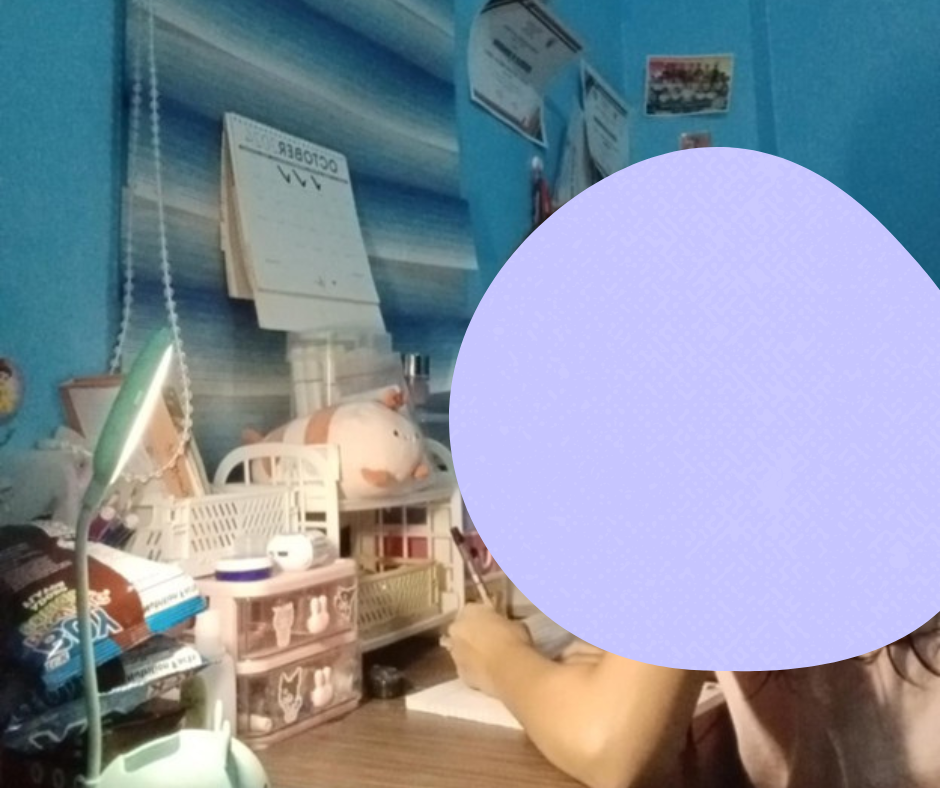
Table of Contents
Goal-oriented
Brian Tracy has famously said that lack of planning is the cause of most failures. The same applies to learning.
Consistent planning helps you identify the most important areas to learn, and address gaps and issues that may be faced.
Anum Touqeer has enumerated reasons why it is important to learn, this includes: staying focused on goals despite the constant change of situations, small ideas prosper, execution makes the dream work, and it provides the confidence and direction to fulfill the dream.
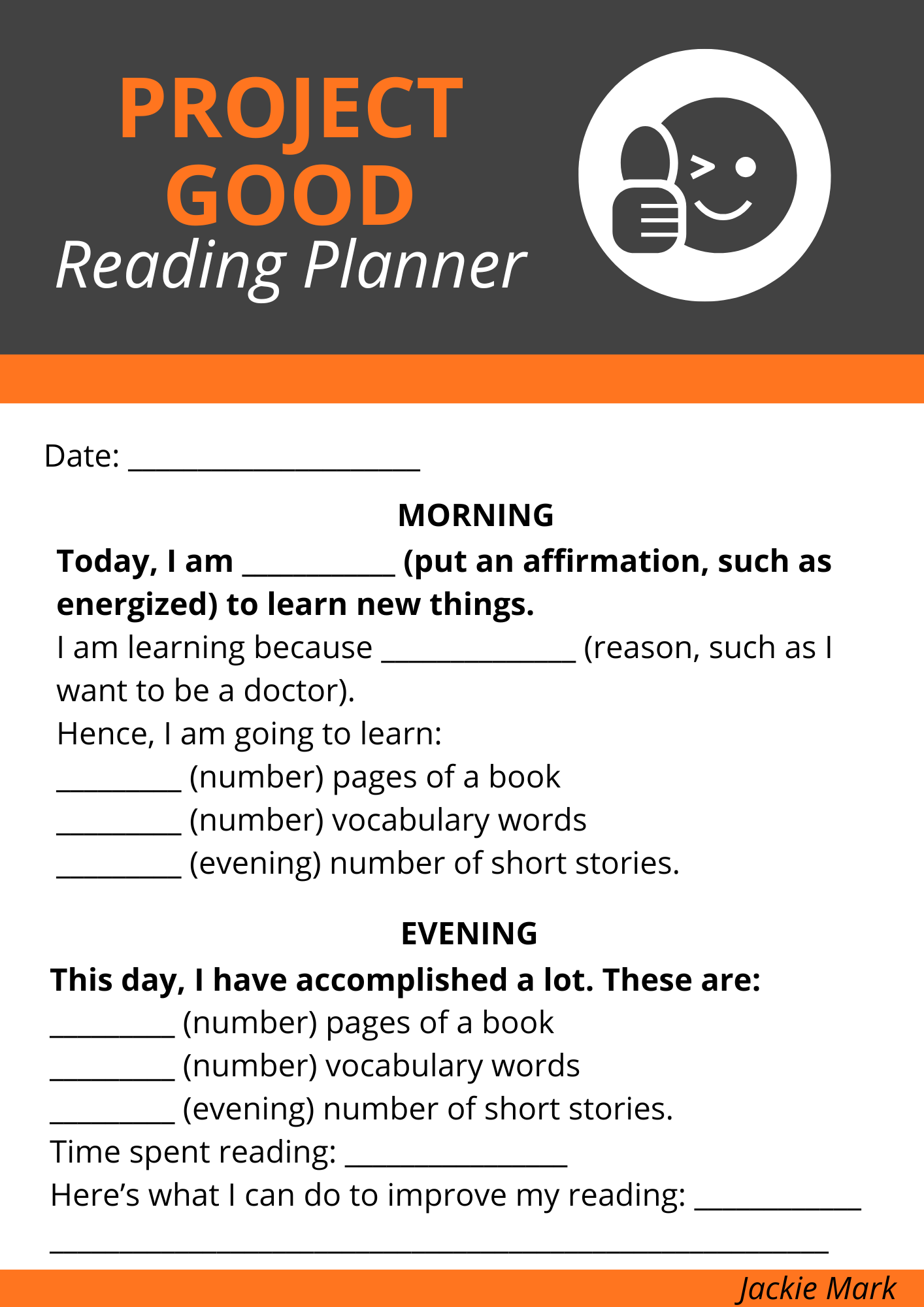
By having a planner to track the pages read, vocabulary words learned, and number of short stories being comprehended, the learner finds the having a reading habit both challenging and rewarding.
Hence, it is necessary for the learners to apply a planning strategy in their educational journey. Project GOOD has a specifically tailored planning method that the students can use.
Take a look:
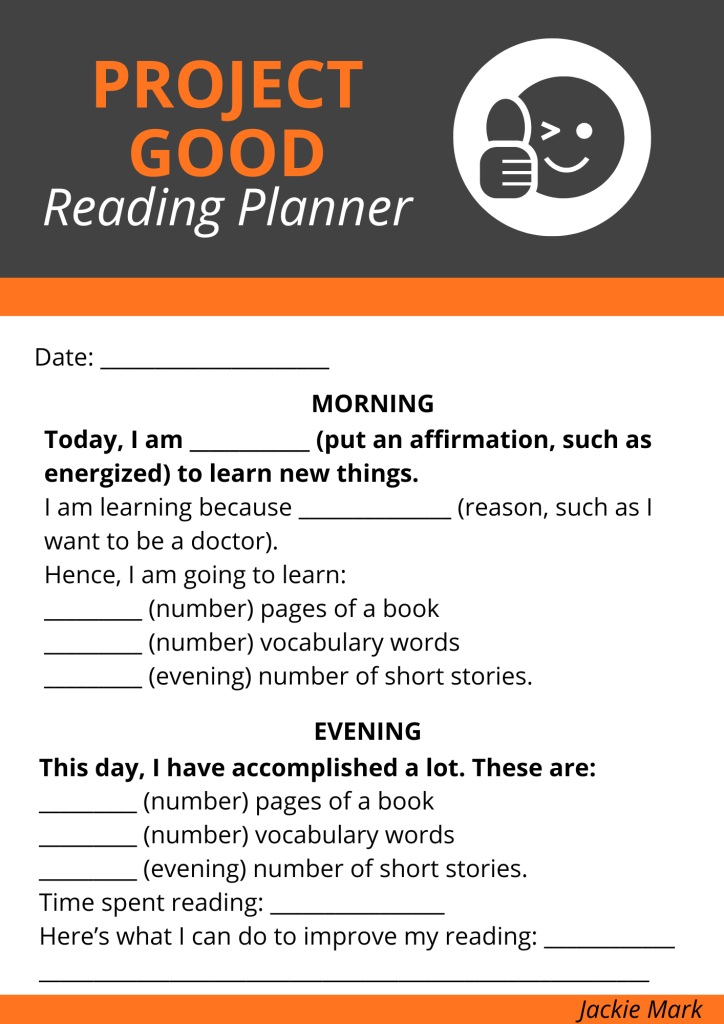
To download, [click here]
Optimized Study Time
Reading time should be a habit, not a one-time activity or done only while being monitored by the teacher. The reason why there is the reading planner.
Further, students should find a daily schedule to read. This can be in the morning, afternoon, or evening. A time where there is less distraction and their mind is active. Finding a schedule ensures that reading time becomes a habit.
Selection of study time is crucial towards effective learning. According to 21K School, the amount of energy, concentration and motivation varies during the day and hence implying that the optimum time to study may vary in individuals.
Following are the recommended optimum time of study, that the learners should be aware:
- 10:00 AM -2:00 PM: It would be best to think and solve tasks in an analytical way.
- 4:00 PM -10:00 PM: Good for retaining memory and in creative learning.
- 4:00 AM -7:00 AM: Ideal to be clear and focused and not have any distractions.
While these are the recommended, patterns are quite different depending on personal chronotype, age, sleeping schedule, and lifestyle. This may not fit your style; you are free to decide for the schedule that best fits you.
Organized Study Space
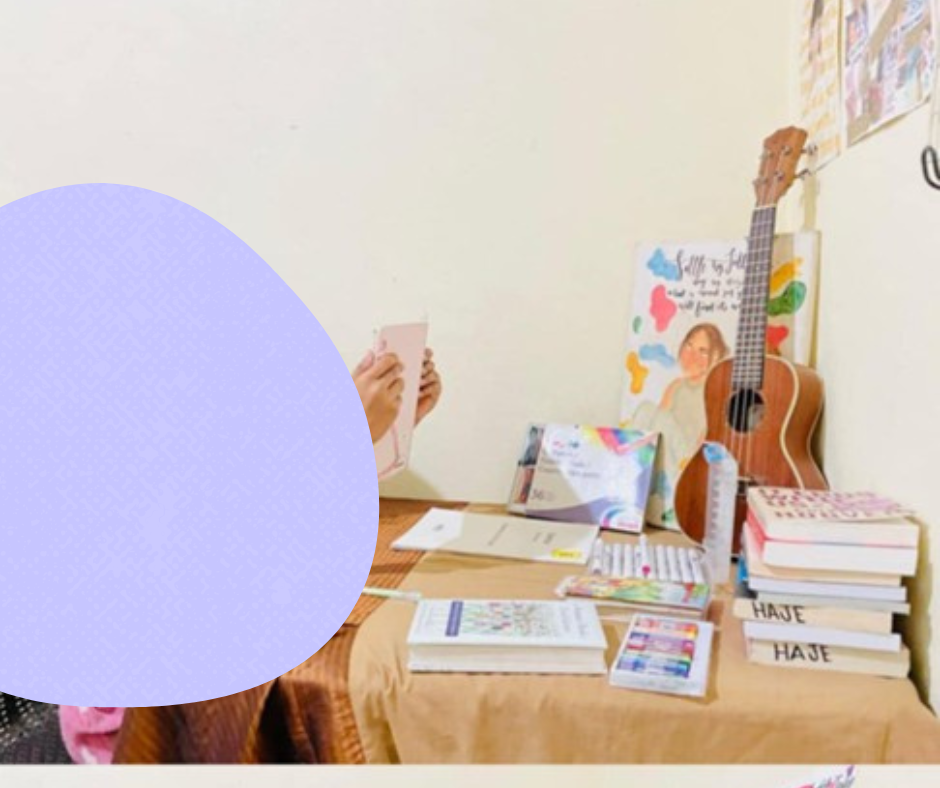
As final major component of the Project GOOD, the students are asked to create their own organized study space. This will cap the study habit (if practiced properly, as should be).
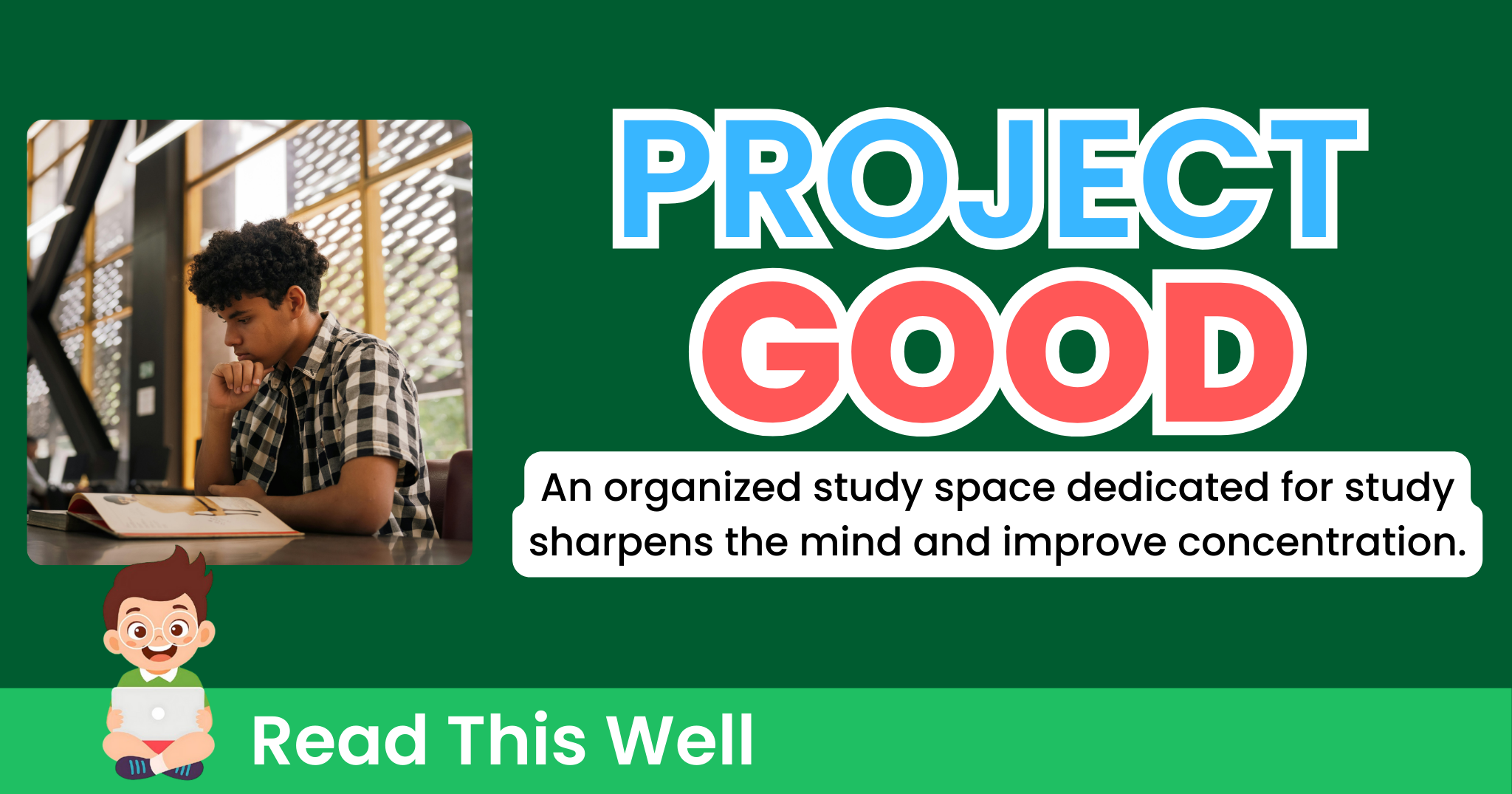
A good study space, per Joyce.edu, is distraction free, has good lighting, and organized. Therefore, you need to find a part in your house where you are less distracted, set-up your desk, add books, supplies and computer depending on your need and availability.
Keep notebooks, dividers, and binders as neat as possible. Overall, you need to make it personal, and you should have one – otherwise you would just flop down on the couch and start your reading session, and then distraction comes or there are other individuals that may hinder concentration.
A dedicated study area keeps you in the zone. That will lead to friction-less, effective study session that will drive better results.
Henceforth, a place you can go anytime and easily keep up with whatever you are learning.
Final Thoughts
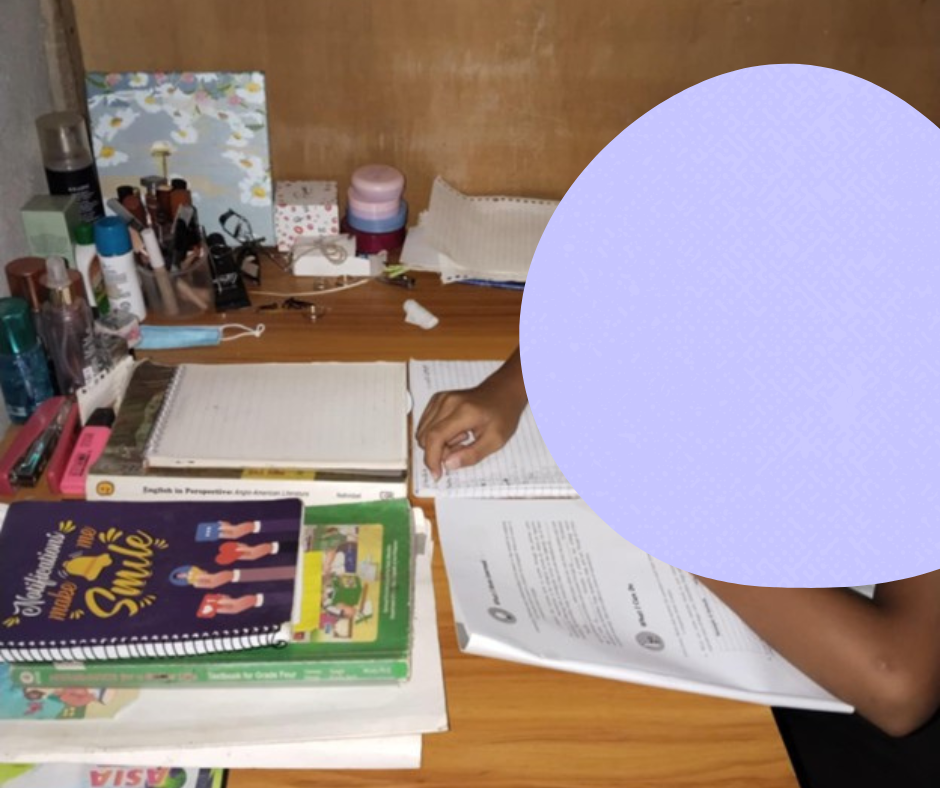
Project GOOD had its first-run last school year 2024-2025, photos of students who took part in the project are shown in the images attached to this post.
The project culminated with a simple recognition to students who have:
- read the most number of books,
- learned the highest number of words,
- read the greatest number of stories, and
- shown the best improvement.
Generally, Project GOOD incorporates having a reading planner, a dedicated study time, and an organized study area for the learners. These three components help enhance the reading prowess of the learners.
First-run, which is SY 2024-2025, met many challenges. Anyway, the project went on.
Still, I believe that these three approaches have high potential to develop the reading habit of every learner.
I recommend you try, or have your child try, and I am waiting for your best results in this blog post’s comment section. All the best!





News on Your Inbox
Fresh insights and exclusive perks delivered straight to your inbox. Sign up now.